Twitch's Hidden Velvet Rope: How the Algorithm Decides Which Gaming Communities Get to Exist
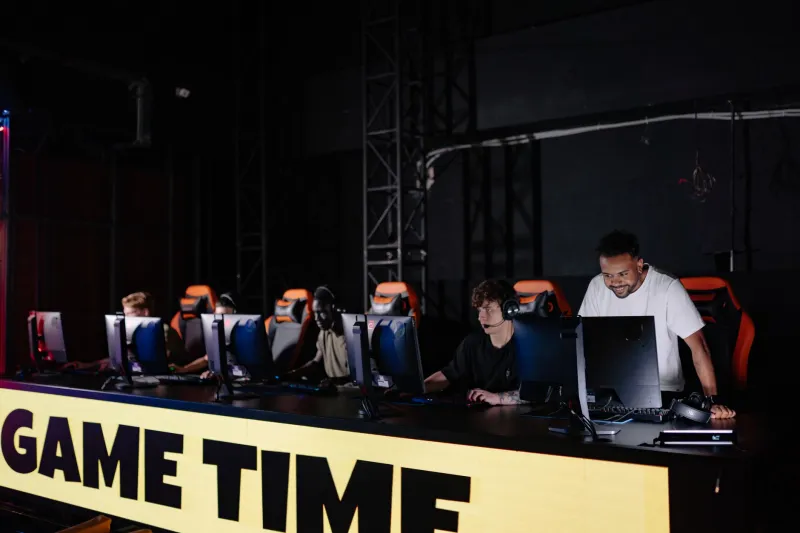
There's a particular kind of frustration that comes from pouring two years into building a Twitch channel around, say, obscure Japanese puzzle games or deep-cut SNES RPGs, only to watch your viewer count flatline while a guy playing the same battle royale title for the four-hundredth time racks up ten thousand concurrent viewers. It doesn't feel like a fair fight. That's because it isn't one.
Twitch's discovery system — the engine that decides what shows up on the front page, in recommended feeds, and in the "Browse" section — isn't neutral. It never was. And the more streamers and community managers talk openly about it, the clearer it becomes that the platform's algorithmic priorities are quietly reshaping what gaming culture looks like, who gets to participate in it, and which games ever find an audience at all.
The Browse Page Is a Cemetery for Small Streamers
If you've ever scrolled deep into a niche game category on Twitch, you've seen the graveyard. Channels with twelve viewers. Eight viewers. Two viewers — one of whom is probably the streamer's roommate. These aren't bad streamers necessarily. Many of them are genuinely talented, deeply knowledgeable about their subject matter, and running tight, engaging productions.
The problem is structural. Twitch's default sort order in any game category lists channels by current viewership, highest to lowest. That sounds reasonable until you realize what it actually does: it guarantees that established streamers with existing audiences dominate every category indefinitely, while newcomers are functionally invisible. A channel with forty viewers showing up at position sixty-seven in a list might as well not exist. Nobody scrolls that far.
For mainstream games — your Forenight clones, your sports titles, your perennial MOBAs — this is annoying but survivable. The categories are large enough that mid-tier streamers can still carve out space. But for niche categories? A game with only a hundred concurrent viewers across the entire platform becomes a dead zone. The algorithm reads low engagement as low value, buries it further, and the cycle accelerates downward.
Engagement Metrics vs. Community Health: Not the Same Thing
Here's the core tension that platforms like Twitch consistently refuse to grapple with honestly: engagement metrics and community health are not the same measurement, and optimizing for one often actively damages the other.
A healthy niche community might have two hundred deeply invested viewers who show up every stream, participate in chat, buy merchandise, and evangelize the content to friends. By raw engagement numbers, that looks like failure compared to a mainstream streamer with five thousand passive viewers who have the stream running in the background while they do something else. Twitch's systems are built to reward the second scenario.
The result is a platform that's excellent at amplifying what's already popular and genuinely terrible at surfacing what's interesting. Gaming has always been a playground — JAOPG readers know this better than most — and a good playground has more than one piece of equipment. When the algorithm funnels everyone toward the same three swings, the rest of the park rots.
The Migration Nobody Officially Announced
Ask around in niche gaming spaces and you'll hear the same story told slightly differently across communities. The speedrunning crowd started leaning harder on dedicated Discord servers and YouTube VODs. The retro gaming communities built out their own subreddits and moved real-time conversation to private channels. Fighting game scenes that were never well-served by Twitch's structure drifted toward YouTube Live or just accepted that their audience would find them through clips rather than live discovery.
None of this was a coordinated exodus. It was just a thousand small decisions made by people who got tired of building on a platform that seemed structurally indifferent to their existence. The communities didn't disappear — they just became invisible to anyone who wasn't already looking for them.
That invisibility has real consequences. New fans can't stumble into a community they don't know exists. Younger players who might have fallen in love with a niche genre never get the exposure. Games that depend on streaming culture for discovery — which is most games now — lose a critical pipeline. The algorithm doesn't just sort content. It makes cultural decisions about what gaming looks like to the next generation of players.
YouTube and the Fragmented Alternative
YouTube isn't a perfect solution, but it's become a genuine refuge for communities that Twitch's live discovery system can't accommodate. The platform's recommendation algorithm has its own well-documented problems, but its handling of long-form video content means that a great piece of niche gaming coverage can find an audience weeks or months after it's posted. That time-shifted discovery model suits communities built around deep knowledge rather than live spectacle.
Kick, the newer streaming platform that's made noise in the past couple of years, has attracted some streamers frustrated with Twitch's policies and structure, though it's too early to call it a meaningful alternative for niche communities specifically. The audience simply isn't there yet in the numbers that matter.
What's actually working, more than any single platform, is a hybrid approach: stream on Twitch for whatever live audience exists, clip the best moments for TikTok and YouTube Shorts, build the real community infrastructure in Discord, and use YouTube long-form to create the discoverable archive that actually brings new people in. It's a lot of labor for what used to just be "go live and people will find you."
The Gatekeeping Question Nobody Wants to Answer
Twitch has never publicly acknowledged that its discovery system has a structural bias toward mainstream content, which makes the conversation difficult to have at scale. The company frames its algorithm as a neutral tool for surfacing quality content. Streamers who struggle with discovery are implicitly told to make better content, grow their audience through external channels, or partner with larger creators for raid traffic.
What that framing sidesteps is the question of intentionality. Whether or not Twitch designed this outcome, the effect is a platform that functions as a gatekeeper — one that decides, through automated sorting and recommendation logic, which parts of gaming culture get amplified and which ones quietly suffocate.
For a medium that's spent twenty years expanding what games can be and who gets to play them, that's a genuinely uncomfortable place to land. Gaming's diversity — the weird, the niche, the obsessive, the underground — has always been one of its greatest strengths. It's what makes this the most interesting entertainment space on the planet.
An algorithm that can't see the value in a forty-person community of people who really, deeply love a game from 1994 isn't a neutral tool. It's a particular kind of taste-maker, and right now, its taste is pretty boring.
The playground is still out there. Twitch just keeps pointing everyone toward the same corner of it.