RGB Dreams and Empty Wallets: The Real Price Tag Behind Your 'Ultimate' Gaming Setup
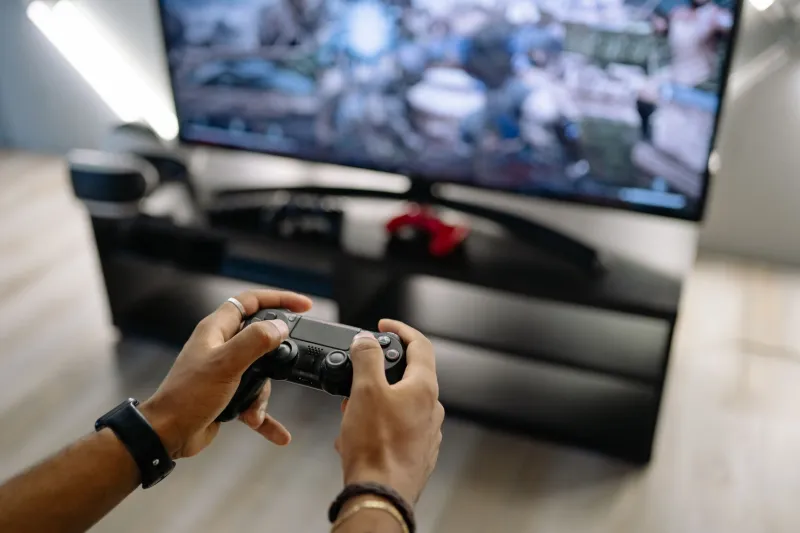
There's a controller sitting in a drawer somewhere in your house. Maybe it's a chunky Xbox 360 pad with a worn-out left bumper, or a first-gen DualShock 4 with analog stick drift so bad it could steer you off a cliff. You probably paid around $40 for it. It worked for years. You didn't think twice about it.
Now pull up any major retailer and try to buy a "serious" controller in 2024. You'll find yourself staring at $150 paddles, $200 hall-effect joystick upgrades, $70 charging docks, and software ecosystems that require a firmware update before you can remap a button. Welcome to the golden age of gaming peripherals — where the playground got a lot shinier and somehow a whole lot more expensive.
At JAOPG, we love gear. But we also love calling things out when the math stops making sense.
From Utility to Lifestyle Product
The shift didn't happen overnight. Through the mid-2000s, controllers were tools. They came in the box, they did the job, and manufacturers competed mostly on ergonomics and durability. The Xbox 360 controller is still cited by hardware designers as a benchmark of functional comfort. It had no RGB. No software. No ecosystem. It just worked.
Something changed around the early 2010s when peripheral makers started borrowing a page from the sneaker industry playbook. Limited colorways. "Pro" variants with marginally better internals but significantly better marketing. The message shifted from this works great to this signals who you are.
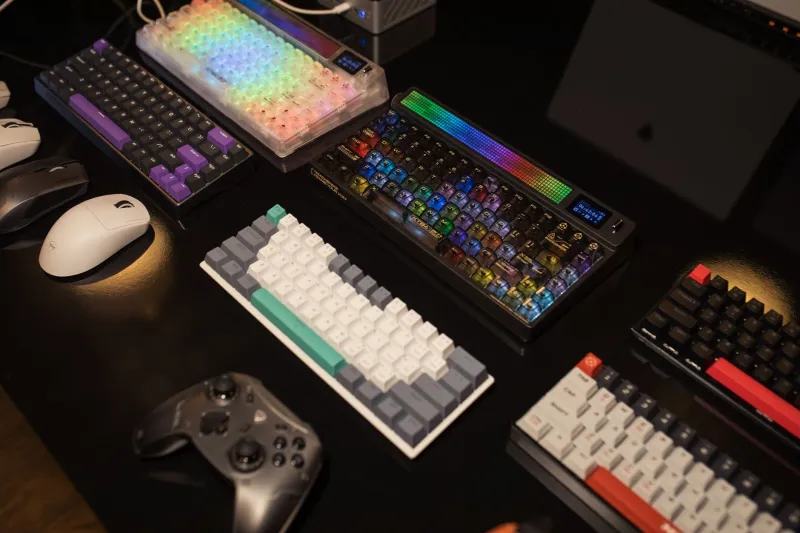
RGB lighting was the Trojan horse. Technically optional, functionally meaningless for gameplay, but visually undeniable on a streaming setup or in a YouTube unboxing video. Once RGB became standard in PC peripherals, it migrated to consoles, headsets, mice, keyboard wrist rests — and suddenly every product needed a companion app just to configure the light show.
"The software ecosystem is where the real lock-in happens," said one hardware engineer we spoke with who works for a mid-tier peripheral brand and asked to remain anonymous. "Once you've got your profiles, your macros, your lighting synced across six devices on one platform, switching brands feels like moving apartments. That friction is intentional."
What 'Pro' Actually Means
Let's talk about the competitive tier, because that's where the price explosion is most dramatic. Controllers marketed to "pro" or "esports" players now routinely run $150 to $250. The Xbox Elite Series 2 sits at $180 at most retailers. The PlayStation DualSense Edge hovers around $200. Third-party options from SCUF and Nacon can push even higher when you add custom configurations.
For that money, you typically get swappable thumbstick tops, adjustable trigger tension, back paddles, and hair-trigger locks. These are real features. Competitive players in fighting games and shooters will tell you back paddles genuinely change how you play — eliminating the need to lift your thumb off the stick to hit face buttons is a measurable advantage.
But here's the uncomfortable question: how many people buying these controllers are actually playing at a level where those advantages register?
We talked to a handful of competitive players — people grinding ranked in Call of Duty, Street Fighter 6, and Apex Legends — and the responses were more nuanced than the marketing suggests.
"The paddles matter. The hair triggers matter," said one Apex player who competes in regional online tournaments. "The RGB on my headset? I turned that off day one. The companion app I have to open to adjust my controller profile? I've updated it twice in two years. That stuff isn't for me — it's for the product page."
A casual player we spoke with — someone who plays maybe ten hours a week across a couple of different games — admitted he spent $220 on a pro controller after watching a streamer use one. "I think I'm maybe five percent better? Honestly I can't tell. But it looks incredible on my desk."
There it is.
The Planned Obsolescence Problem
Beyond the upfront cost, there's a durability conversation that doesn't get enough oxygen. Premium controllers are not necessarily more durable than budget ones. Stick drift — the phenomenon where analog sticks register movement without input — has hit nearly every major controller line in the past decade, including the $200 options. Nintendo Switch Joy-Cons became infamous for it. The DualSense has faced widespread complaints. Even some Elite Series 2 units developed issues within warranty windows.
Repair is increasingly difficult. Many premium controllers use proprietary parts. Third-party repair shops exist, but the economics often push consumers toward replacement rather than fixing. And with new "editions" dropping regularly — special colorways, minor spec bumps, co-branded designs — the pressure to upgrade is constant.
"The replacement cycle is the business model," our hardware source told us. "A controller that lasts eight years is a bad product from a revenue standpoint. A controller that lasts two to three years, looks incredible in photos, and gets superseded by a new version is a great product."
That's not cynicism — that's just how consumer electronics work now. But it's worth naming.
The Ecosystem Tax
Beyond the hardware itself, consider what orbits it. A "complete" setup in 2024 might include the controller itself, a charging station (sold separately, obviously), interchangeable faceplates or thumbstick sets, a carrying case, and the companion software subscription in some cases. Headset ecosystems add another layer — virtual surround sound features often require proprietary software that only works with that brand's hardware.
Add it all up and a gamer who commits to a single brand's ecosystem can easily spend $400 to $600 on what is, functionally, input devices. For many Americans, that's a rent payment or more.
The irony is that the games themselves — the actual playground — haven't fundamentally changed in what they demand from hardware. A well-built $60 controller will run Elden Ring just as well as a $200 one. The enemies don't hit harder because your thumbstick has hall-effect sensors.
What Actually Matters
If you're a competitive player investing serious time in a single game, a pro controller with paddles and adjustable triggers is a legitimate investment. The quality-of-life improvements are real and the muscle memory benefits compound over time.
If you're a casual or mid-level player, the honest answer is that a standard first-party controller — the regular DualSense or the standard Xbox controller — is genuinely excellent hardware for $60 to $70. The gap between that and the $200 tier is mostly features you'll configure once and forget.
And if you're buying a premium peripheral primarily because it looks good on your desk or matches your stream aesthetic? That's a completely valid choice — just own it as a lifestyle purchase rather than a performance one. There's nothing wrong with wanting your playground to look sharp.
Just don't let the marketing convince you that the lights are making you better at the game.
The Bottom Line
The gaming peripheral market is not broken — it's working exactly as designed. Premium products exist at premium prices, entry-level options remain accessible, and the space in between is filled with marketing language calibrated to make mid-tier feel inadequate. The playground is just a lot more expensive to decorate than it used to be.
Know what you're actually buying. The $200 controller might be worth every penny for your situation — or it might be the most elaborate way you've ever lit up a drawer. Either way, the game doesn't care. It just wants you to press start.