Chasing Pixels You Can't Afford: How the GPU Rat Race Abandoned the Players Who Started It All
There's a version of gaming that used to feel like the most democratic hobby on the planet. You saved up, you bought a mid-range rig or a budget console, and you were in. The playground was open. Nobody was checking your frame rate at the door.
That version of gaming is getting harder and harder to recognize.
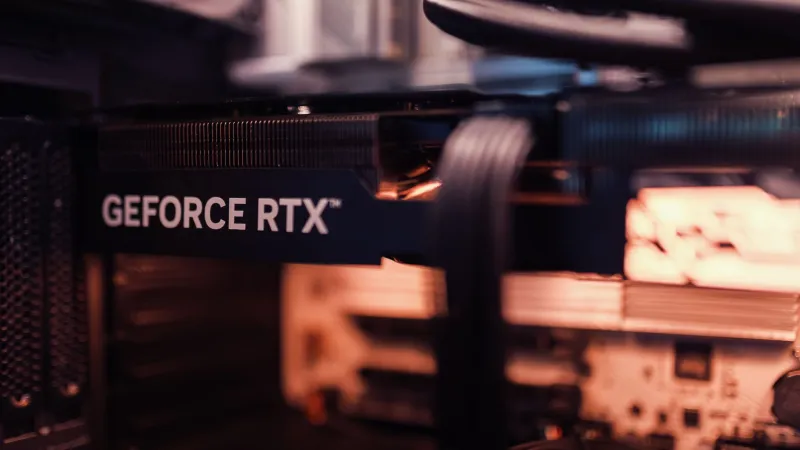
Right now, if you want to build a PC capable of running the latest titles at settings that don't look like a watercolor painting left in the rain, you're looking at a graphics card that could run anywhere from $400 on the low end to well north of $1,200 for anything carrying a flagship badge. And those are the retail prices — assuming you can even find one before a scalper bot does.
This is the GPU lottery, and most casual players aren't winning.
How We Got Here
The graphics card shortage that peaked between 2020 and 2022 was a perfect storm nobody really recovered from. COVID disrupted supply chains. Crypto miners swooped in and vacuumed up inventory like it was a Black Friday sale that never ended. Scalpers automated the rest. By the time a regular person — someone who just wanted to play games, not mine Ethereum — refreshed Newegg for the hundredth time, the shelves were bare.
Manufacturers like NVIDIA and AMD eventually caught up on supply, but something shifted in the pricing psychology that never quite snapped back. The "entry-level" tier quietly crept upward. Cards that used to represent a reasonable on-ramp to PC gaming now sit at price points that feel more like a commitment than a casual purchase.
Meanwhile, the marketing machine kept the hype cycle spinning. Every new GPU generation arrives wrapped in benchmarks and ray-tracing demos that look stunning — and require hardware most people simply don't own.
The 4K Obsession Nobody Asked For
Here's the thing about 4K gaming: most players genuinely cannot tell the difference between a well-optimized 1080p experience and 4K on anything smaller than a large monitor or TV viewed from a few feet away. Studies on visual perception back this up. Your eyes have limits.
But you wouldn't know that from the way GPU manufacturers and game studios talk about their products. 4K has become the de facto benchmark for "serious" gaming, which means every hardware generation is engineered — and priced — to chase that target. If you're not running 4K at 60fps minimum, some corners of gaming culture will quietly suggest you're not really playing the right way.
This is how a hobby that once celebrated creativity and community starts to resemble a luxury goods market. The goalposts move. The price tags follow. And the casual player who just wants to jump into the latest open-world adventure on a $300 setup gets left squinting at a resolution tier that the industry has decided is no longer the point.
Two Tiers, One Playground
What's emerging is a genuinely two-tiered ecosystem, and it's more pronounced on PC than anywhere else. On one side, you've got enthusiast players — people with the disposable income or the obsessive dedication to budget for high-end hardware, who live in Discord servers debating thermal paste application and DLSS settings. On the other, you've got everyone else: players who are either getting priced out of the hobby entirely, defaulting to console where the hardware cost is at least predictable, or simply falling back on older titles that don't demand cutting-edge specs.
That second group? They're not a niche. They're arguably the backbone of gaming's cultural expansion over the past two decades. The Minecraft generation. The folks who discovered gaming through browser games and Flash titles and eventually graduated to something more serious. The people who made gaming mainstream in the first place.
Locking them out — or making them feel like second-class citizens in the playground — is a strange way to say thank you.
The Console Cushion Is Getting Thinner Too
Console gaming used to be the great equalizer. Pay your $500 upfront, and you're playing the same version of the game as everyone else. No GPU drama, no driver updates, no compatibility headaches.
But that cushion is compressing. The PS5 and Xbox Series X launched at $500 and have barely budged on price. Accessories cost more than ever. And with cross-gen support finally fading out, older hardware owners are finding themselves left behind on a faster timeline than previous console generations allowed.
Add in the subscription fatigue that's already gripping the industry — a topic we've covered extensively here at JAOPG — and you've got a player base that's being squeezed from every direction simultaneously. Hardware costs more. Software costs more. Ongoing access costs more. At some point, "just another outstanding playground" stops being an invitation and starts sounding like a punchline.
Is a Reckoning Coming?
The subscription bubble is already showing cracks. Services are consolidating, prices are rising, and players are starting to vote with their wallets in ways the industry didn't anticipate. The hardware arms race may be heading toward a similar inflection point — just on a longer timeline.
There are signals worth watching. The indie gaming scene continues to thrive on modest specs, which is part of why it's so culturally vital right now. Steam Deck proved there's genuine appetite for a capable gaming device that doesn't require a second mortgage. And NVIDIA's own data has consistently shown that the majority of its active user base is running cards two or three generations behind the flagship tier — not because they don't care about performance, but because they're making rational economic decisions.
The market is telling the industry something. Whether the industry is listening is another question.
The Playground Needs a Wider Gate
Gaming's greatest strength has always been its accessibility — the sense that the hobby could absorb almost anyone willing to show up. That ethos built communities, launched careers, and turned a niche pastime into one of the largest entertainment industries on the planet.
The GPU arms race, left unchecked, chips away at that foundation. Not all at once, and not in a way that makes headlines the same way a studio closure or a controversy does. But gradually, the message being sent to casual and budget-conscious players is that the playground has a cover charge now — and it keeps going up.
That's worth paying attention to. Because a playground that only the well-funded can access isn't really a playground at all. It's a country club with better lighting.